In today’s world, where sustainability is becoming a core value for consumers and businesses alike, car wash establishments are increasingly adopting water recycling systems. These systems not only contribute to environmental conservation but also offer significant cost savings and operational efficiency. This comprehensive guide explores how these systems work, the benefits they provide, and the critical components involved in their functionality.

How Does a Car Wash Water Recycling System Work?
A car wash water recycling system is designed to capture and treat wastewater generated during the washing process. Here’s a step-by-step breakdown of how it operates:
- Collection of Wastewater
- After a car is washed, the dirty water, which contains soap, dirt, and other contaminants, is collected in a designated tank rather than being sent to the sewer.
- Separation and Sedimentation
- The collected water undergoes a separation process. Larger particles and debris settle to the bottom of the tank, allowing clearer water to rise to the top. According to the U.S. Environmental Protection Agency (EPA), effective sedimentation can reduce contaminants by up to 50%.
- Filtration
- The water is then passed through various filtration systems. This step is crucial as it removes smaller particles and impurities. Different filtration methods, such as sand filters or membrane filters, can achieve removal rates of up to 99% for certain contaminants.
- Disinfection
- Before recycled water can be reused, it must be disinfected. Common methods include ultraviolet (UV) light treatment and chemical disinfection (like chlorine). Research indicates that UV disinfection can effectively eliminate up to 99.9% of harmful microorganisms.
- Storage and Distribution
- Once treated, the clean water is stored in tanks and then distributed back into the wash system for future use. This creates a closed-loop system that significantly reduces the need for fresh water.
How Much Water is Used in a Car Wash?
Water usage in car washes can vary widely based on the type of wash and the efficiency of the equipment. On average:
- Self-Service Car Wash: Uses approximately 15 to 30 gallons of water per vehicle.
- Automatic Car Wash: Can use between 50 to 100 gallons per wash, depending on the system and the number of rinse cycles.
- Touchless Car Wash: May use about 30 to 60 gallons per wash.
In contrast, a water-efficient car wash with a recycling system can reduce its water usage by as much as 90%. For instance, if a facility typically uses 100,000 gallons of water per month, implementing a recycling system could decrease this to just 10,000 gallons, saving thousands of dollars in water bills annually.
The Hand-Wash Water Saving Myth
There’s a common belief that hand washing a car is more environmentally friendly than using a professional car wash. However, studies show that this isn’t the case:
- Water Usage: A typical hand wash can consume anywhere from 80 to 140 gallons of water, depending on the method used and the type of hose. In contrast, a professional car wash with a recycling system can use as little as 15 gallons.
- Pollutants: Hand washing often leads to runoff that carries soap and dirt into storm drains, which can harm local waterways. Professional car washes typically have systems in place to manage this wastewater responsibly.
These statistics highlight the benefits of using a professional car wash with a recycling system rather than opting for hand washing.
Components and Functions of a Water Recycling System
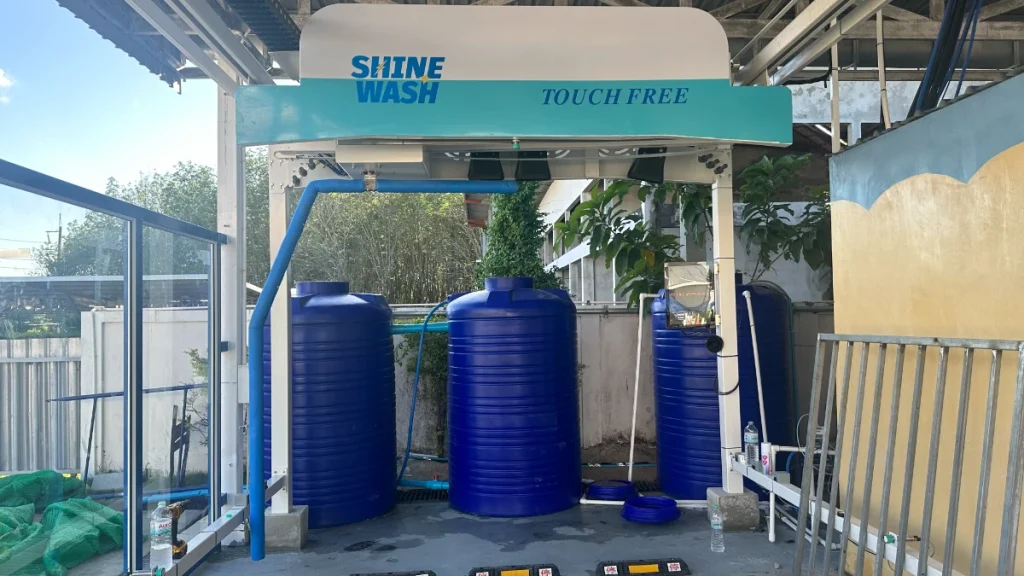
Understanding the components of a car wash water recycling system is crucial for evaluating its efficiency and effectiveness. Here’s a closer look at each part:
- Water Tanks
- The initial component is the collection tank, which stores the used wash water. Tanks must be designed to handle varying water volumes and allow for easy access for maintenance.
- Separation and Sedimentation
- As mentioned earlier, this process involves removing larger debris and sediments. According to the Water Environment Federation, effective sedimentation can improve water quality by reducing solids before filtration.
- Wash Water Filtration System
- Filtration is a critical step, often utilizing multiple stages. Common methods include:
- Sand Filters: Effective at removing larger particles.
- Membrane Filters: Capable of filtering out microscopic contaminants, achieving removal rates above 99%.
- Filtration is a critical step, often utilizing multiple stages. Common methods include:
- Disinfection
- Disinfection ensures that the recycled water is safe for reuse. UV disinfection systems are increasingly popular due to their effectiveness and environmentally friendly nature. A study from the National Water Research Institute found that UV systems can eliminate pathogens without introducing harmful chemicals.
- Storage Tank Water
- The treated water is stored in a separate tank, ready for reuse. Proper storage systems are vital to prevent contamination and maintain water quality.
- Distribution and Reuse
- The final step involves distributing the recycled water back into the wash bays. Modern systems often include automated controls to optimize water distribution, ensuring that each wash station receives the right amount of water.
Benefits of Recycling Water in Your Car Wash Business
Implementing a water recycling system in your car wash can yield numerous benefits, from environmental impact to financial savings.
A Great Way to Conserve Water
Water conservation is more critical than ever, especially in regions facing drought or water shortages. By recycling water, car wash operators can dramatically reduce their overall consumption. For instance, the California Water Board reports that car washes can save up to 60% more water when utilizing recycling systems compared to traditional methods.
Substantial Water Cost Savings
With rising water costs, the financial benefits of recycling water are substantial. Businesses can save thousands annually. According to the International Carwash Association, the average car wash can save around $20,000 per year on water costs alone by implementing a recycling system.
Reduce Discharge of Wastewater
Car washes produce significant amounts of wastewater, which often leads to high sewer fees. By recycling water, businesses can significantly reduce the volume of wastewater discharged, potentially leading to lower sewage costs. Many municipalities offer incentives for businesses that implement water-efficient practices, further reducing operational costs.
Reduce Fresh Water and Sewer Costs With Cutting-Edge Equipment
Investing in advanced water recycling technology can provide even greater savings. For example, some modern systems use advanced filtration techniques and smart technology to optimize water use, resulting in up to 90% recycled water usage per wash. This means a typical car wash using 100,000 gallons per month could decrease fresh water usage to just 10,000 gallons, leading to substantial savings on both water and sewer bills.
Case Studies and Real-World Examples
- Eco-Friendly Car Wash, California
- This car wash adopted a state-of-the-art water recycling system that has reduced its water usage from 100,000 gallons to just 10,000 gallons per month. The owner reported annual savings of approximately $25,000 in water and sewer costs.
- Green Clean Car Wash, New York
- By implementing a recycling system, Green Clean Car Wash reduced its environmental footprint while attracting eco-conscious customers. They reported a 30% increase in business after marketing their water-saving practices.
Conclusion
Car wash water recycling systems represent a forward-thinking approach to both environmental stewardship and business efficiency. By conserving water, reducing costs, and appealing to eco-conscious consumers, car wash operators can set themselves apart in a competitive market. With statistics backing the benefits of recycling, there’s no better time for car wash businesses to invest in these sustainable practices.