
Car wash water recycling system.
Treat car wash water
and reuse it in the wash.
Connect wastewater collection, treatment and storage to the wash stages that can use recycled water. Plan the system around your machine, water quality, demand and available space.
How water moves
through the system.
A planning overview from collection to suitable reuse. The treatment stages and connections are defined for the selected system.
Collect
Wash wastewater runs through the collection and drainage system.
Settle
Plan sedimentation and tank access around the collected water and solids.
Treat
Select filtration and any other treatment against the required water quality.
Store
Coordinate treated-water storage, pumps and controls with wash demand.
Reuse
Treated water returns to the wash stages that can reuse it; fresh water covers the rest.
See the water system
in operation.
Explore the treatment equipment and a water recycling system introduction. Both are silent and start only when you choose to play them.
Treatment equipment walkthrough
Water recycling system introduction
Equipment, storage
and treatment details.
SHINEWASH treatment equipment. Your site gets its own equipment list and installation layout.
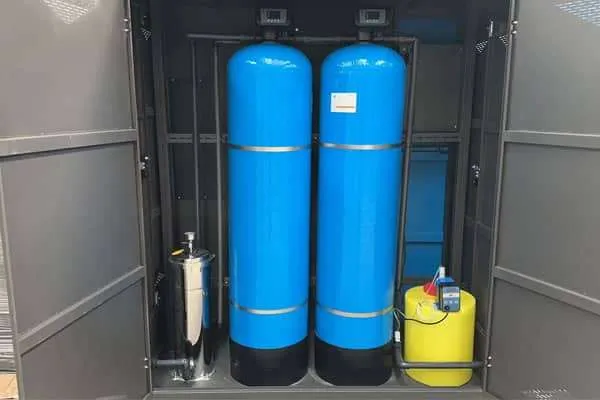
Treatment equipment
Filter vessels and a dosing tank within the equipment enclosure.
Controls & connections
Reference views of the enclosure, filtration and dosing equipment.
Sedimentation tank
A tank used for collection and settling, with service access.
Example treatment
flow diagrams.
These diagrams show two different treatment examples. Each site uses the process its water needs.
Carbon & bag-filter reference
The diagram shows a water pump, two activated-carbon filters, a bag filter and the outlet.
Sand & carbon-filter reference
The diagram shows a raw-water pump, PP filter, quartz sand, activated carbon, foam reducer and water tank.
Size the system
around your wash demand.
Water quality, treatment and site services are reviewed together before a system is chosen.
| Wash equipment | Machine type, wash programs and proposed reuse points |
|---|---|
| Operating demand | Daily volume, peak wash period and operating hours |
| Water information | Source-water quality, wastewater condition and current consumption if known |
| Treatment capacity | Confirm design flow and required output quality |
| Storage & collection | Confirm settling, treated-water tanks and access for cleaning |
| Installation space | Equipment footprint, pipe routes and maintenance clearance |
| Utilities & interfaces | Confirm pumps, power, controls, drainage and fresh-water connections |
| Maintenance | Agree inspection, cleaning, filter servicing and water-quality checks |
Before you choose
a water reuse system.
Answers about treatment, capacity, maintenance and reuse.
What does the Smart Water Circulation System do?
It collects and treats car wash wastewater for reuse in suitable wash stages. The final treatment arrangement, storage and reuse points are selected around the water quality, wash equipment and operating requirements.
Can recycled water be used in every stage of a car wash?
Not always. Water-quality requirements differ between wash stages, and some stages may need fresh water or extra treatment.
How much water will the system save?
There is no single recovery percentage for every installation. Ask for a project water balance covering incoming water, wash demand, collected wastewater, losses, treatment and reuse. Savings depend on the selected process and how the site operates.
Which filters and tanks are included?
The reference configurations show sedimentation storage and more than one treatment arrangement, including carbon filtration, bag filtration and another example with a PP filter, quartz sand, activated carbon and a foam reducer. Each site gets its own equipment list.
How is the system sized for my wash site?
Share the machine type, daily and peak wash demand, wash program, current water use if known, water-quality information and available space. Treatment capacity, storage, pumps, pipework and reuse connections are sized from these.
Can it be added to an existing car wash?
An existing site can be reviewed for a retrofit. Send photographs, drainage and tank details, a utility plan, the equipment list and operating demand. The review shows whether collection, tank capacity, space or connections need to change.
What maintenance should be planned?
Filters, tanks, pumps, controls and any chemical dosing equipment need regular inspection: cleaning, filter-media replacement, sediment removal and water-quality checks. Ask for the service schedule of your configuration.
Does water reuse remove the need for drainage or discharge arrangements?
Plan collection, drainage, cleaning and any remaining discharge separately. Reusing water does not make a site zero-discharge or approve it; check local requirements.
Plan room for tanks, controls and routine servicing.
Explore building & equipment rooms