Fleet dimensions
Measure the largest truck or bus with its mirrors, roof equipment and protrusions for the operating clearance.

Rollover, touchless and drive-through
washing for trucks and buses.
Compare rollover, touchless rollover and drive-through equipment for trucks, buses and commercial fleets. Plan the system around vehicle dimensions, daily wash volume and site circulation.
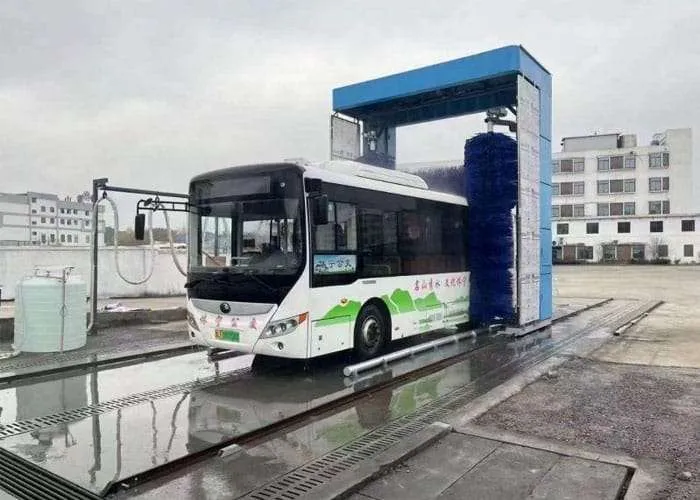 Truck and bus washing equipment
A fleet wash needs more than equipment clearance. Consider dirt conditions, driver guidance, queuing and turning space.
Measure the largest truck or bus with its mirrors, roof equipment and protrusions for the operating clearance.
Compare brush contact with water-and-detergent spraying for your vehicle condition and dirt load.
Plan entry alignment, stopping or driving instructions, exit turns and wash scheduling for your fleet.
Compare how the vehicle moves and how it is cleaned before choosing a model.

A moving gantry for a dedicated fleet bay
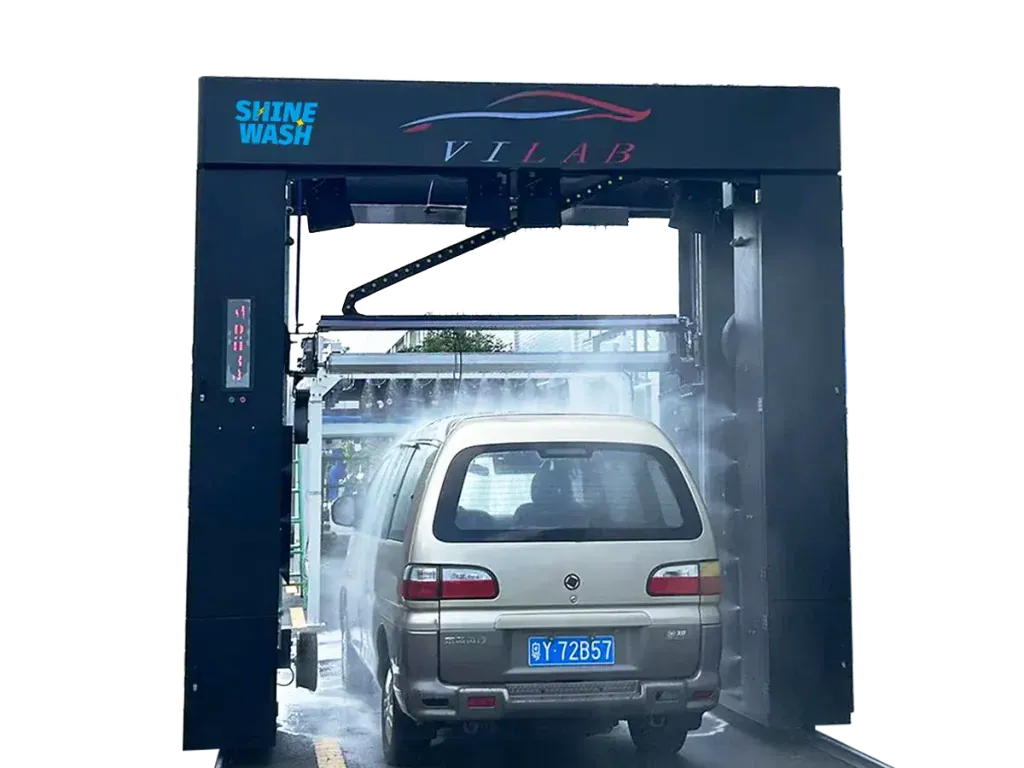
Spray-based cleaning without rotating brushes
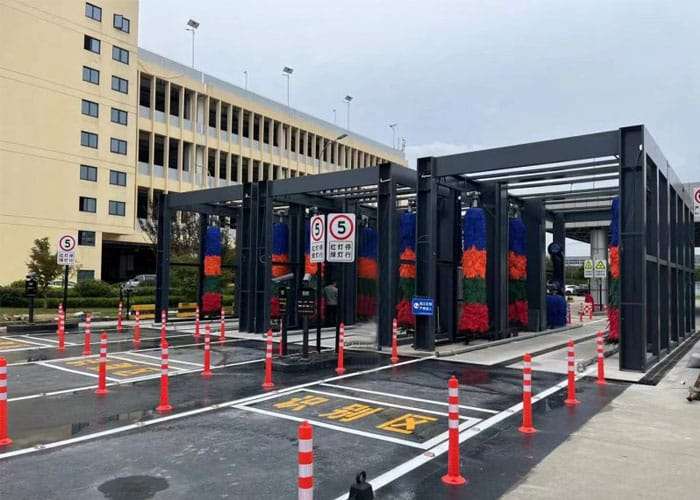
The bus moves through a planned wash route
Drive-through bus footage from its original product page. This is one format example; rollover systems use a different vehicle movement.
Use these differences to prepare an enquiry. Capacity, cycle duration and clearances depend on the model and configuration.
| Equipment | Wash format | Planning focus |
|---|---|---|
| Rollover truck wash | A moving gantry for a dedicated fleet bay | Gantry travel, brush setup and vehicle clearance |
| Touchless rollover truck wash | Spray-based cleaning without rotating brushes | Spray travel, dirt load, water and chemical supply |
| Drive-through bus wash | The bus moves through a planned wash route | Entry alignment, driving speed and exit circulation |
Send a plan of the available wash area and the vehicles it must serve. Prepare foundations and utilities only after the final layout is approved.
Discuss my fleet siteVehicle suitability, site planning and equipment options.
Start with the fleet dimensions, available wash area and vehicle movement. A rollover gantry washes a stopped vehicle; a drive-through format washes as the vehicle moves along a planned route. Compare brush cleaning with touchless spraying for your fleet and dirt conditions.
Vehicle compatibility depends on the selected configuration. Send length, width and height for each vehicle type, including mirrors, roof equipment, trailers and other protrusions, and get the approved size limits before ordering.
Brush equipment touches the vehicle with its brushes. Touchless equipment uses water and detergents, with no brushes touching the bodywork. The right method depends on vehicle condition, bodywork and dirt load.
Duration varies by wash format, vehicle size, dirt load and chosen program. Request the cycle or driving-speed requirements for your selected system. Include entry, alignment, exit and queuing when estimating fleet throughput.
Request the layout for the selected equipment and your largest vehicle. Allow for gantry travel or a drive-through route, approach and exit turning space, maintenance access, drainage and utilities. Do not apply passenger-car bay dimensions to heavy vehicles.
Plan water pressure and flow, water quality, drainage and wastewater treatment, chemical supply and total electrical demand. Water treatment or recycling is planned separately for the site and local conditions.
Send the installation country, vehicle types and dimensions, daily wash volume and available site area. Include a circulation sketch, dirt conditions and utilities where available.